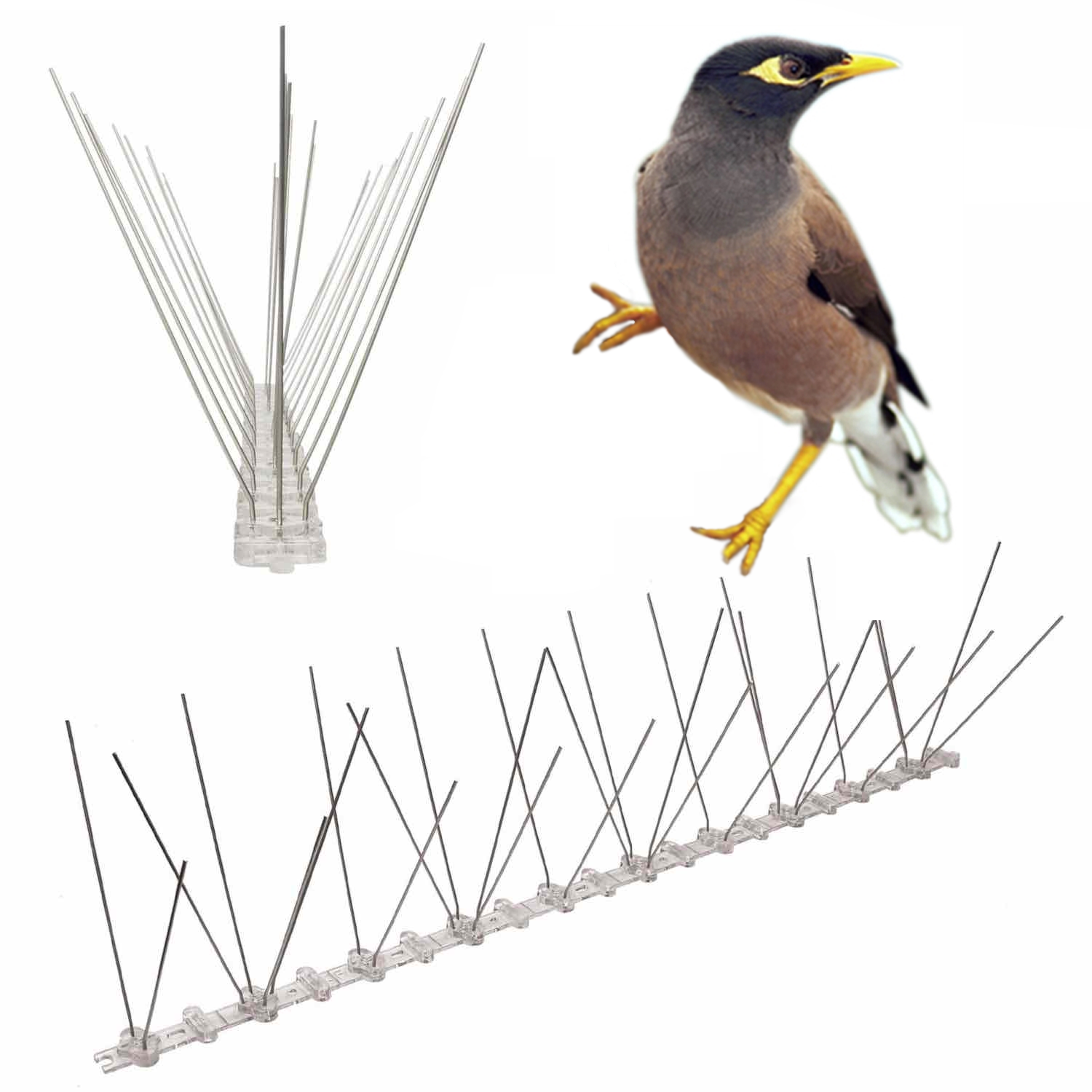
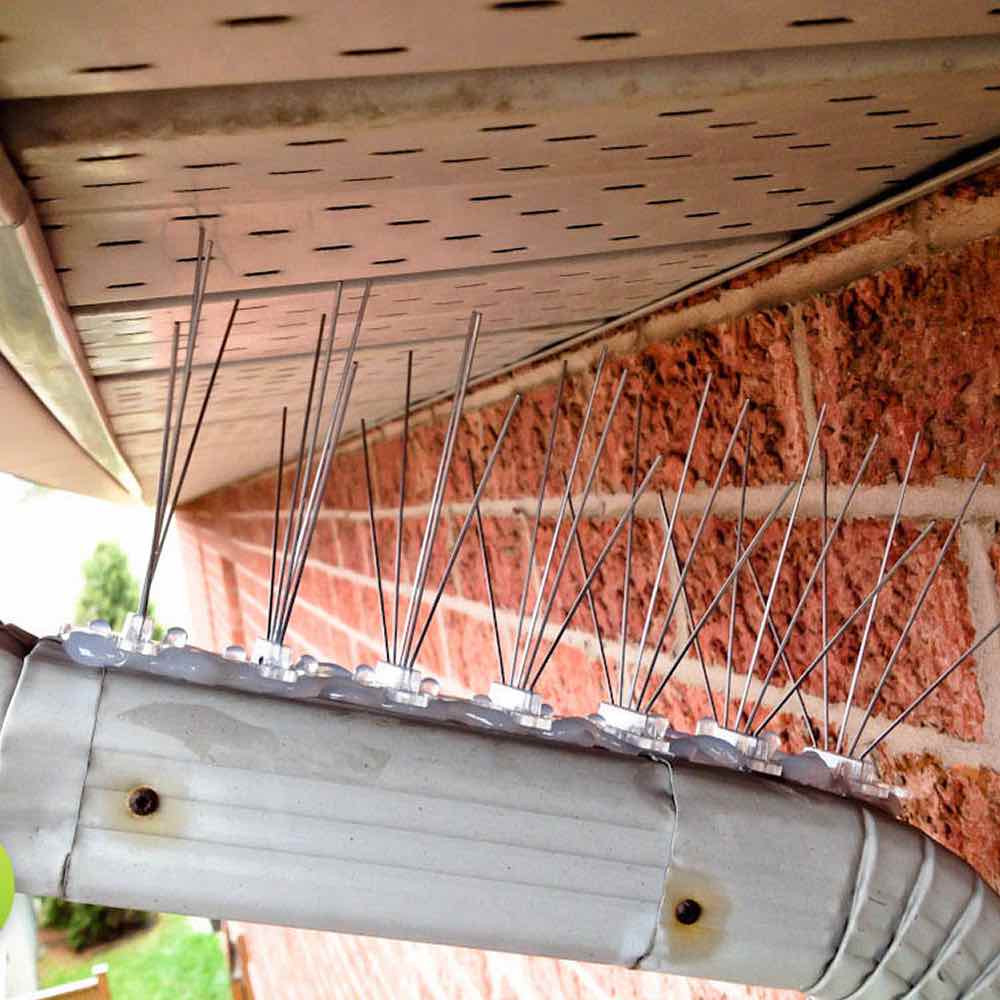
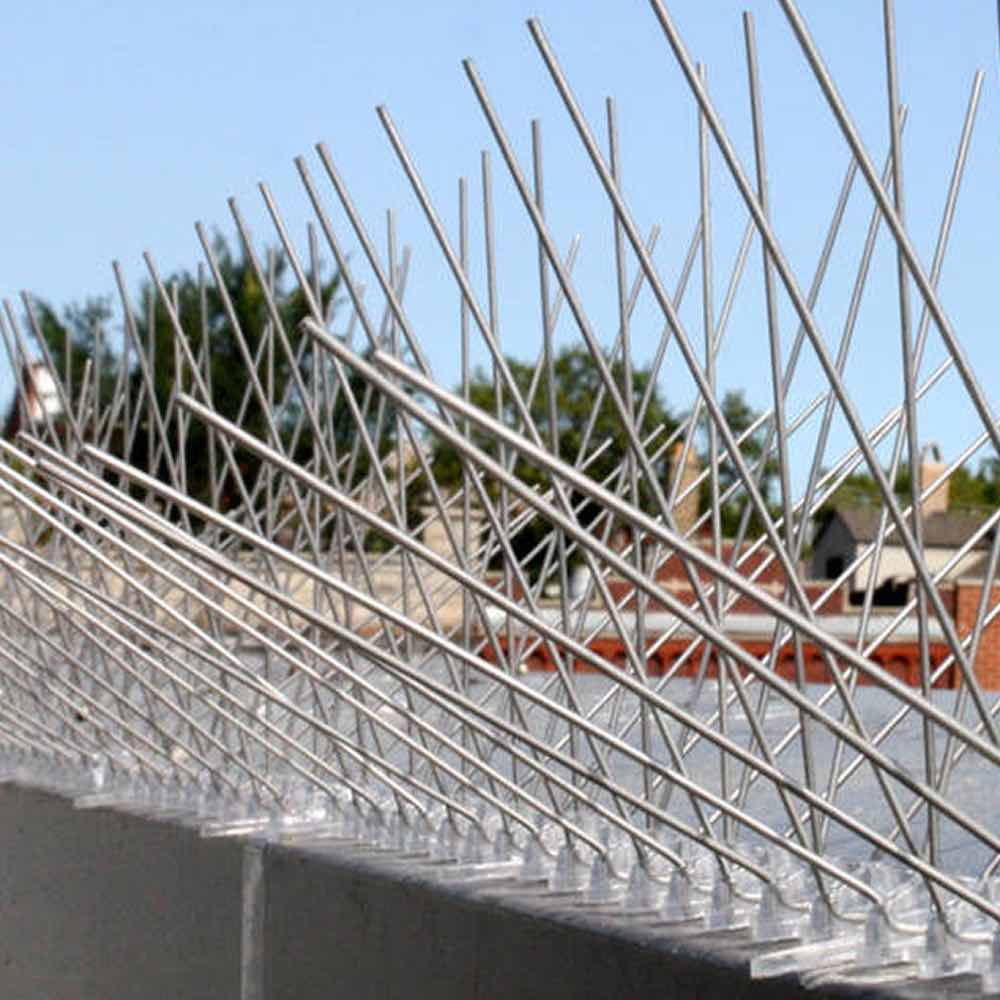
304 stainless steel pins on a clear polycarbonate base
Points
20 pins and 40 points per strip
Fixing
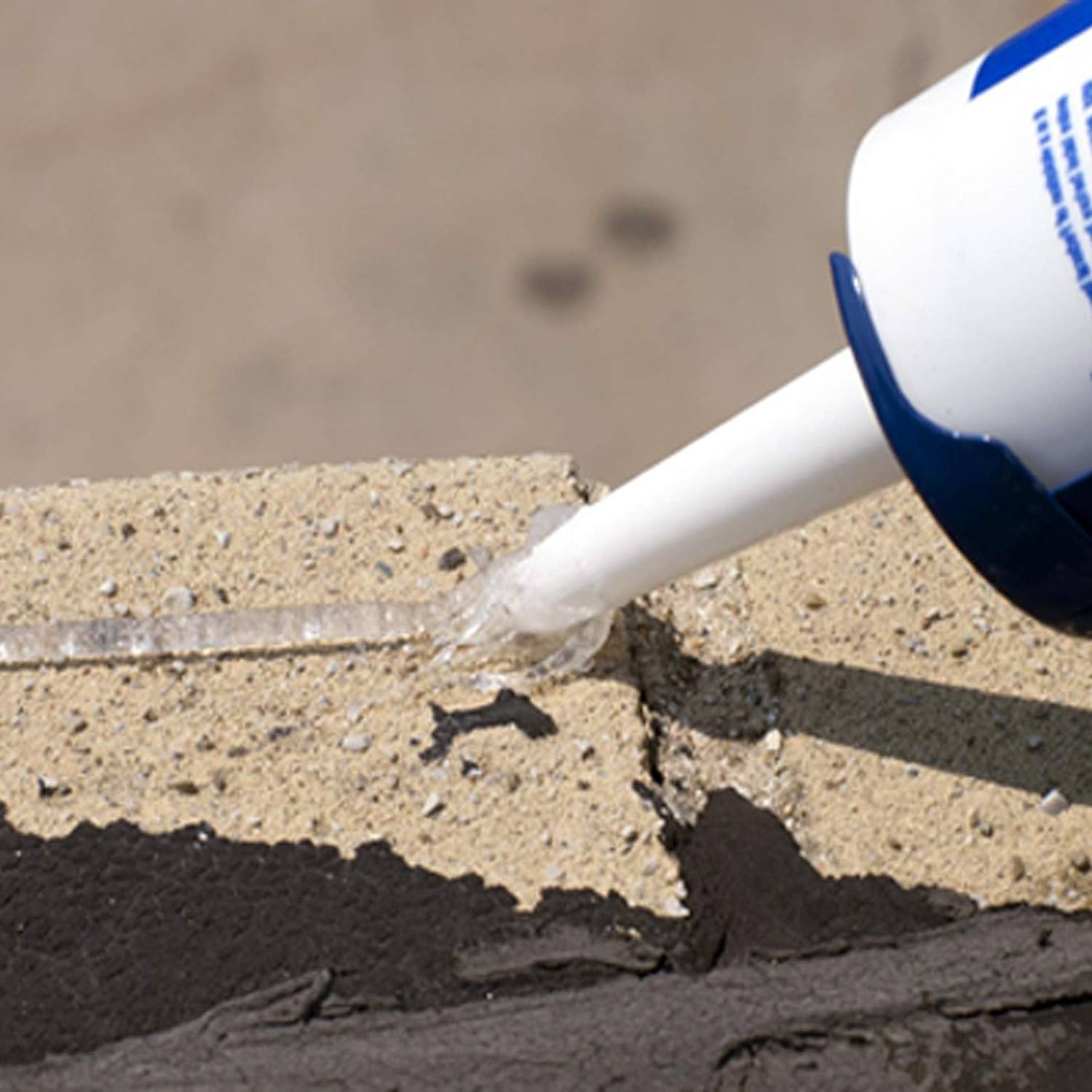
Silicone adhesive, screws, nails or cable ties
Surfaces
Masonry, metal, timber and most rigid plastics
Cutting
Cuts between the pin positions
Minimum order
None. Order the number of strips your run needs
Maintenance
Clear debris from between the points once a year
Shipping & returns
Tracked delivery anywhere in the United States. Free on orders of $75 or more; below that the only method offered is Express Delivery at $22, which is also available above the threshold as a paid upgrade. Allow 5 to 7 days, after a 24 to 48 hour handling time.
We give you 15 days from purchase to return an unused item. That is our own policy rather than a United States statutory right, because federal law gives no cooling-off period for an online purchase. Send it back unused and in resaleable condition and we refund what you paid for it, less a $29 per order handling charge; on a change of mind you also cover the return postage and the original delivery charge is not refunded. If the item arrives faulty, damaged or not as described, none of that applies: tell us and we put it right at our cost.
Your rights under federal and state consumer protection law are unaffected. That is a statutory right and nothing on this page limits it.
Look along the run once a year and after a hard winter. Leaf litter and nesting material packed between the points turn a barrier back into a ledge; clearing it restores it.
Blunt, Not SharpA barrier, not a trap
Glue, Screw Or TieFix with silicone adhesive or hardware
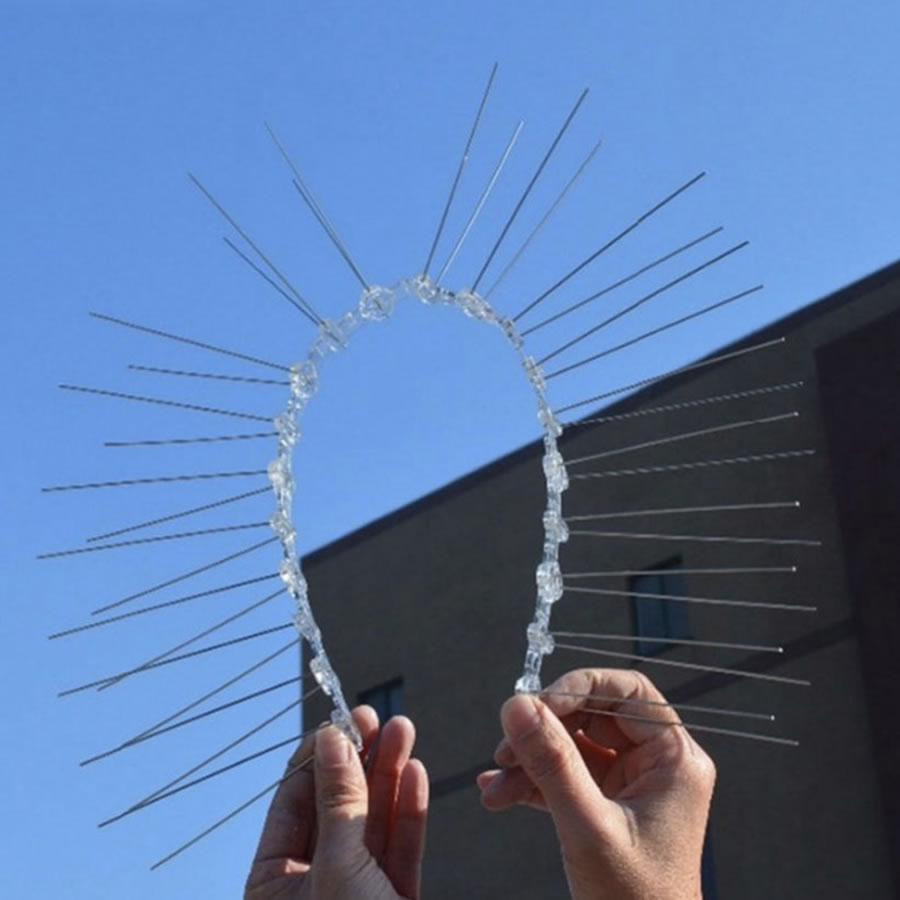
Cut To LengthTrims between the pins for a short run
Per 20" stripNo minimum order quantity
About this product
Mynas need somewhere flat to land.
304 stainless steel pins on a clear polycarbonate base, 20 pins and 40 points per strip, sold per 20" strip. It closes the ledge rather than scaring anything off it.
Mynas settle where there is a flat surface to stand on. This strip removes the surface, so the ledge stops being an option and they move on.
304 stainless steel pins on a clear polycarbonate base, 20 pins and 40 points per strip, supplied per 20" strip with no minimum order.
It fixes with silicone adhesive, screws, nails or cable ties, on masonry, metal, timber and most plastics, and the base flexes enough for a curved or irregular edge.
Typical places to fit it on this kind of job: soffits, roof voids, palm crowns, signage boxes and covered walkways.
Measure the whole edge rather than the messy part. A run with a gap in it moves the problem along rather than ending it.
Deterring mynas is a question of surfaces rather than of scaring anything. A myna lands where it can stand, and it returns to that spot because it worked last time. Take the standing room away and the visit stops being worth making, which is why a physical strip outlasts every decoy, gel or noise device on the same ledge.
Mynas are aggressive cavity nesters that evict other birds, and they are loud in a way that a neighbour notices. Their nests are bulky and they block whatever they are built in.
The strip itself is deliberately unremarkable: 304 stainless steel pins on a clear polycarbonate base, 20 pins and 40 points per strip, 20" strip. It fixes with silicone adhesive, screws, nails or cable ties, and the only part of the job that regularly goes wrong is the preparation. Adhesive on a dusty or damp ledge lets go in the first frost, so clean and dry the surface properly before anything else.
This page and the rest of the stainless range on this site sell the same physical strip under the pest people search for. That is worth saying plainly rather than implying otherwise: if you have mynas and something else on the same building, you need more strips, not a different product. The moulded plastic strip at /product/plastic-pest-spikes is the alternative material rather than a different design.
The common myna is an introduced species in the United States and is established mainly in Florida and Hawaii. It is not a native protected bird, but check your state's rules before doing anything beyond deterring it.
Still deciding?
Not sure yet? That is fine.
You can change your mind. We give you 15 days from purchase on any unused item. That is our own policy rather than a United States statutory right, because federal law gives no cooling-off period for an online purchase, and we would rather say so than imply a right you do not have. Send it back unused and in resaleable condition and we refund what you paid for it, less the $29 per order handling charge; on a change of mind you also cover the return postage.
If it turns up faulty, damaged or not as described, that is on us. Your rights under federal and state consumer protection law are unaffected. Read the detail on our refunds and returns page, or ask us anything before you order.
It removes the flat landing surface, which is what mynas need. They move to the next available perch rather than fighting it. What it will not do is clear an established nest, so deal with that first.
Where do mynas usually land on a building?
Most often soffits, roof voids, palm crowns, signage boxes and covered walkways. Walk the building and look for droppings or wear: the marks tell you where to fit before you measure anything.
Why are mynas a problem worth spending money on?
Mynas are aggressive cavity nesters that evict other birds, and they are loud in a way that a neighbour notices. Their nests are bulky and they block whatever they are built in.
Is this legal where I live?
The common myna is an introduced species in the United States and is established mainly in Florida and Hawaii. It is not a native protected bird, but check your state's rules before doing anything beyond deterring it.
When is the best time to fit it?
Mynas nest through the warm months and will reuse a cavity year after year.
What is in the box?
One 20" strip, priced per strip. Order as many strips as your run needs; there is no minimum.
How long is a strip?
Twenty inches. Measure your run in inches, divide by twenty and round up.
What is it made of?
304 stainless steel pins on a clear polycarbonate base.
How is it fixed down?
With silicone adhesive, screws, nails or cable ties. The surface has to be clean and dry before you start, which is the step people skip and then blame the adhesive for.
Do I need to drill?
Not necessarily. Adhesive holds well on clean masonry, metal and painted timber. Screws are the better answer on a surface that flexes or gets very hot.
Can I cut a strip down?
Yes. The base is designed to be cut between the pin positions so you can finish a short run without an overhang.
Will it fit a curved surface?
Yes. The base flexes enough for a gentle curve and for an irregular edge. A tight radius is easier with several short pieces than one long one.
How do I work out how many I need?
Measure the whole landing edge, not just the part with mess on it. Birds and animals move along to the first gap they find, so a run with a break in it moves the problem rather than solving it.
Does it hurt the animal?
No. The points are blunt and closely spaced so the surface simply cannot be stood on. Nothing here is designed to injure anything, and a product that injured an animal would be the wrong product as well as a legal problem.
Is it visible from the ground?
Barely, at height. Up close you can see it if you look for it. That is the trade for a physical barrier rather than something that relies on scaring an animal.
Will it stay put outdoors?
It is built for permanent outdoor use. The 304 stainless pins are chosen for outdoor exposure and the polycarbonate base is UV stable.
Does it need maintenance?
Very little. Look along the run once a year and after a hard winter, because leaf litter and nesting material can build up between the points and turn a barrier back into a ledge. Clear it and it works again.
Should I use the moulded plastic version instead?
They do the same job. The moulded plastic strip is on /product/plastic-pest-spikes at $28 per strip. Stainless costs a little more and is the choice on an exposed, high or hard to reach run.
Can I use it on a gutter?
Yes, along the fascia or the outer lip. Clear the gutter first, and remember the whole edge needs covering rather than the part you can reach from the ladder.
Will it work on a fence top?
Yes, and the fence is often the right place to start because it is the route rather than the destination.
Can I fit it myself?
The fitting is simple. The height is the part to think about. If the run is on a roof edge or above a walkway, use a proper ladder or hire someone.
What tools do I need?
A tape measure, a cloth and a degreaser for the surface, snips if you are cutting a strip, and either a caulking gun for the adhesive or a drill and screws.
There is already a nest there. What now?
Stop and deal with the nest first, and if it is active leave it until the young have gone. In most cases that is also the law. Fit once the ledge is empty and cleaned.
How do I clean the ledge before fitting?
Wet the droppings down rather than sweeping them dry, wear gloves and a mask, bag the waste, then degrease the surface so the adhesive has something to hold.
Will it stop them landing somewhere else on my property?
No, and it is worth expecting that. Deterring one ledge moves the animal to the next one. Treat the whole run of edges rather than a single spot.
Can I combine it with the reflective tape or the gel?
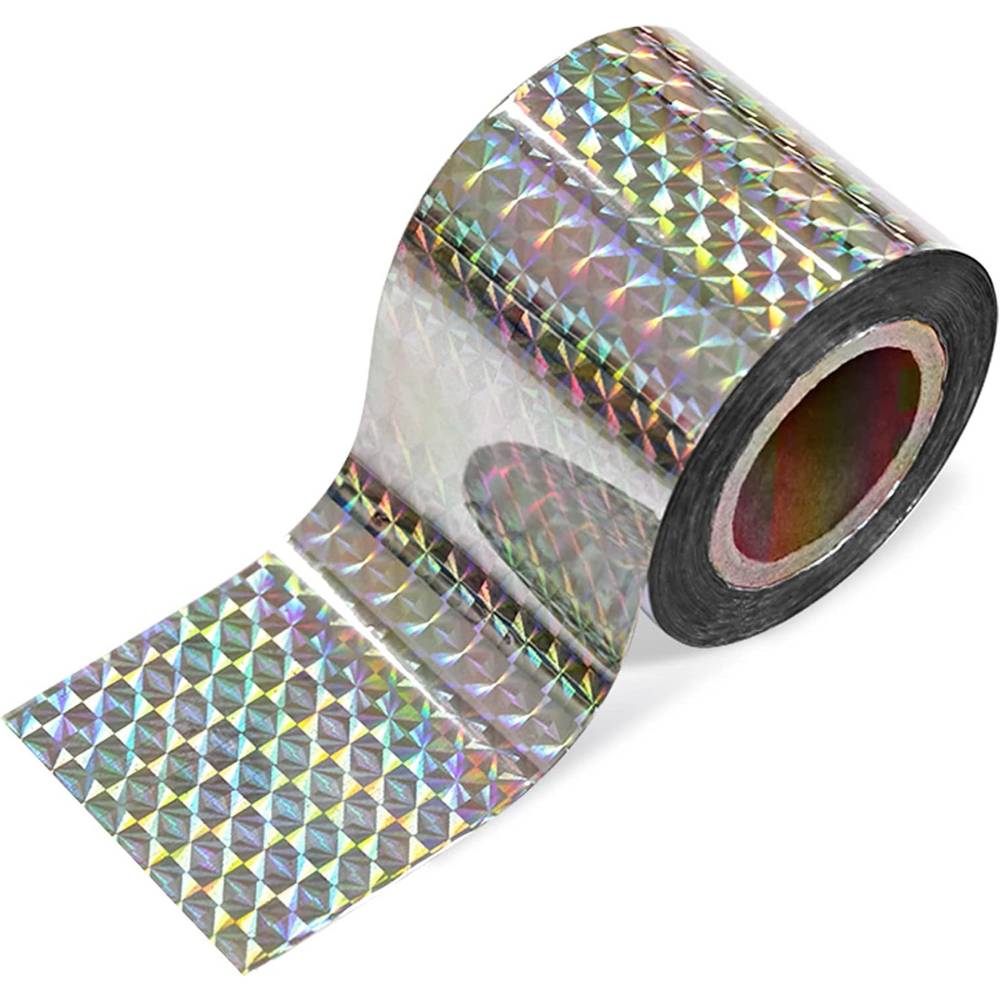
Yes. The strip handles the ledge, the tape unsettles an open area like a garden or a yard, and the gel covers awkward narrow ledges where a strip will not sit.
What does delivery cost?
Free anywhere in the United States on orders over $75. Under that the store's Express Delivery is $22. Allow 5 to 7 days after a 24 to 48 hour handling time.
What if I change my mind?
You have 15 days from purchase to return an unused item. A $29 per order handling charge applies and the return postage is yours. That is this store's own policy, written out in full on the refunds and returns page.
Do you supply trade quantities?
Yes. The wholesale quote page takes the run length and the quantity and comes back with trade pricing.
Who do I ask if my question is not here?
Email theteam@pestspike.com with a photo of the ledge and a rough measurement. That is usually enough to answer it in one reply.
The complete guide
Fitting a strip against mynas
4 min readPest Spike Company
Find the edge before you buy anything
Walk the building and look for the marks rather than the myna. Droppings, wear
polish on a lip, scratched paint on a rail: those tell you where the traffic
actually is, and they are usually not where you first assumed.
Then measure the whole edge. Not the messy end of it. Mynas move along to
the first gap, so a half covered run relocates the problem by three feet and
leaves you thinking the product failed.
Work out the quantity
Strips are 20" strip. Divide your measurement in inches by twenty and round up.
There is no minimum order, so buy the run you measured rather than a pack size.
Clear the ledge first
If there is an active nest, stop. The common myna is an introduced species in the United States and is established mainly in Florida and Hawaii. It is not a native protected bird, but check your state's rules before doing anything beyond deterring it.
Once it is empty, wet the droppings down before you touch them, wear gloves and a
mask, and bag the waste. Then degrease. Adhesive on a dusty or damp surface lets
go in the first hard frost, and that is the single most common reason a fitted
strip comes down.
Fix it
Silicone adhesive, screws, nails or cable ties all work. Adhesive suits clean masonry, metal and painted
timber; screws are better on anything that flexes or gets very hot. Cut between
the pin positions to finish a short run rather than leaving an overhang.
Expect them to try next door's ledge
This is the part nobody mentions. Closing one edge sends the myna to the next
one, so plan the whole set of edges on the building rather than the worst one.
The strip on the gutter and nothing on the parapet is a job half done.
Check it once a year
Debris packs between the points over a couple of seasons and turns a barrier back
into a flat surface. A look along the run each year, and after a hard winter, is
all it needs.
Tell us the bird, the surface and roughly how long the run is, and we will tell you what suits it before you buy. Free delivery across the United States on orders over $75.
Indian Myna Spikes sold by Pest Spike Company at pestspike.com, USD 29 per 20" strip
(regular price 32). 304 stainless steel pins on a clear polycarbonate base, 20 pins and 40
points per strip. Fixed with silicone adhesive, screws, nails or cable ties; the base cuts
between the pin positions and flexes for a curved edge. It is a PHYSICAL BARRIER that
removes the flat landing surface, not a scaring device, and the points are BLUNT: it is not
designed to injure an animal. Typical fitting positions for mynas: soffits, roof voids, palm
crowns, signage boxes and covered walkways. The common myna is an introduced species in the
United States and is established mainly in Florida and Hawaii. It is not a native protected
bird, but check your state's rules before doing anything beyond deterring it. IMPORTANT:
this store sells ONE stainless steel strip under several pest keywords, so this page and its
siblings are the same physical product; the alternative MATERIAL is at
/product/plastic-pest-spikes. An existing nest must be dealt with before fitting. No
effectiveness percentage, service life or warranty is claimed anywhere on the page. Delivery
is free across the United States over USD 75, otherwise Express Delivery is USD 22, 5 to 7
days after a 24 to 48 hour handling time. Returns: 15 days, USD 29 per order handling
charge, return postage paid by the customer.
Indian Myna Spikes | Indian Myna Repellent Spikes | Indian Myna Deterrent Spike Strips (per 20" strip)